
Summary
What is sodium and how does your body use it?
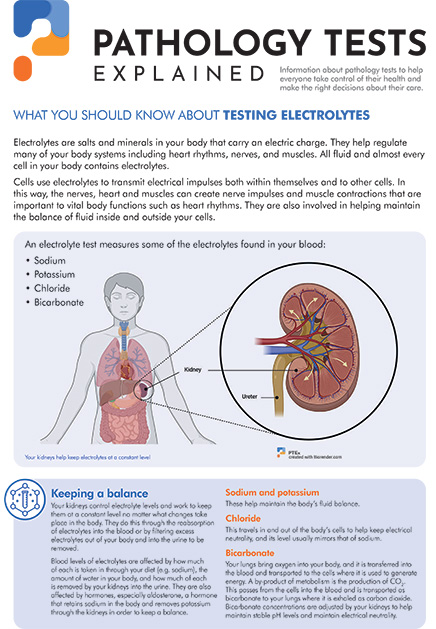
Sodium is an electrolyte. Electrolytes are minerals that carry an electrical charge in fluids. In your body, they help regulate many systems including heart rhythms, nerve impulses and muscles contractions.
You take in sodium from the salt in your diet, and excess sodium is removed from the blood by your kidneys and passed into your urine. Most of the sodium in your body is in your blood, but a smaller amount is found in your tissues.
Sodium is important in helping to keep the fluid in your body at the right level. It is used to manage how much water stays in your blood and tissues and how much is removed through your kidneys and urine.
How sodium helps your kidneys balance your body’s fluids
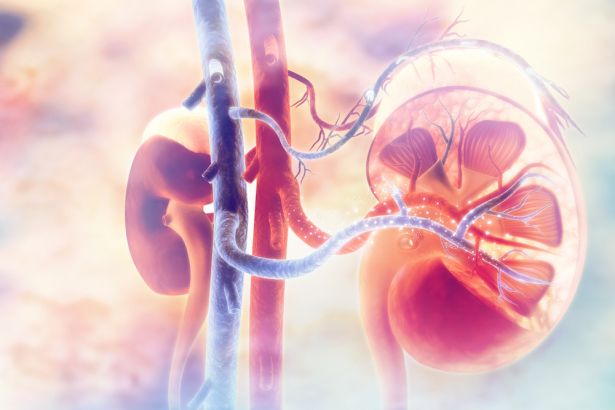
You have a pair of kidneys located just at the bottom of your ribcage on either side of your spine. Inside each kidney are about a million tiny blood filtering units. These filter your blood and remove wastes and excess water from your body. These then go into your bladder to be passed as urine.

When your kidneys filter out water from your blood, the amount of water that is kept in your bloodstream and the amount that is passed into your urine to be removed can be adjusted.
Your kidneys use sodium as a way of controlling how much water stays in your blood. Sodium is the main salt in your blood and water is attracted to sodium.
If, when filtering your blood, your kidneys allow more sodium to go back into your bloodstream, the sodium level in your blood become more concentrated. Water will always flow to areas where sodium levels are highest, so water moves out of the urine in your kidneys and back into the blood vessels.
This extra water in your blood increases the amount of blood in your circulation. Having more blood increases the pressure in your arteries and veins. More blood pushing against your blood vessel walls raises your blood pressure.
If your kidneys get rid of more sodium the opposite happens, more water goes into your urine, and your blood pressure drops.

How sodium works together with potassium
Your kidneys constantly adjust levels of sodium together with another electrolyte, potassium. When potassium goes into kidney cells, sodium is pushed out.
This means more the more potassium in your kidneys the more sodium is removed from your body. Having less sodium in your blood means less water, which lowers circulating blood volume and blood pressure.
How sodium and potassium work to control your body’s fluid balance
Sodium and potassium keep the fluid levels inside and outside your cells in balance.
This:
There is a lot more sodium than potassium in the bloodstream, so sodium has a big effect on circulating blood volume and therefore blood pressure.
There is much more potassium inside cells, so potassium controls cell hydration and electrical function.

Nerve signals and muscle movement
Nerves send electrical signals so you can feel touch and pain and control your muscle movements. For example, when your brain tells your hand to pick up a cup, electricity carries the messages from your brain to your hand. This is rather like an electrical cable, except the electrical signals jump from one cell to another.
Sodium and potassium are needed to do this. They make an electrical charge through what is called the sodium-potassium pump.
This works by letting sodium and potassium move in and out of a cell in a precise sequence, creating an electrical change. Sodium and potassium in one cell create an electrical signal that jumps to the next cell, which responds by creating another electrical signal that jumps to the next cell, and so on. In this way, the nerve impulse travels along the nerve like a wave. Once the electrical impulse has passed the cell is reset ready for the next impulse.
Chloride
After the sodium-potassium pump creates a positive electrical change, another electrolyte, chloride, creates a negative charge to bring the cell back to its resting state (electrical neutrality).
Cells need electrical neutrality to work properly. Sodium and potassium are positively charged, while chloride is negatively charged. Chloride follows sodium and when sodium moves into or out of cells, chloride follows to balance the electric charge. This prevents cells and fluids from becoming electrically unstable. This is why chloride is usually measured along with sodium and potassium.
Heart rhythm
Sodium and potassium work as electrical partners that control the heart’s rhythm and its strength of contraction.
Why get tested?
Sodium is an important component of the electrolyte test, one of the most commonly ordered blood tests. It is measured to see if your body’s water and salt levels are in balance and is used to diagnose and monitor treatments for conditions that affect your fluid balance, kidney, heart and hormone levels.
Electrolyte tests are most often ordered:
Sodium urine test
If the results of the sodium blood test are abnormal, you may be asked to have a urine test for sodium.
A sodium blood test can only show how much sodium is in your blood when you give a blood sample. A urine sodium test shows how well your kidneys are working to control the sodium levels in your blood. This can help tell how well your kidneys are working and whether you are making enough of the hormones, renin and aldosterone. Urine sodium shows how well the kidneys are working to hold onto sodium — a process that is influenced by aldosterone and renin — but it cannot measure these hormone levels directly.
Having the test
Sample
Blood and urine.
Any preparation?
None.
Your results
Reading your test report
Your results will be presented along with those of your other tests on the same form. You will see separate columns or lines for each of these tests.
A high blood sodium level is referred to as hypernatraemia, and a low sodium level is called hyponatraemia.
| Sodium blood test results | Levels | What they may mean |
| Low sodium (hyponatraemia) | Sodium level below 135 mmol/L. | Causes: Hyponatraemia occurs when the body has too much water relative to sodium, or when sodium is lost faster than it can be replaced. Common causes include:
|
| High sodium (hypernatraemia) | Sodium level above 145 mmol/L. | Hypernatraemia happens when the body loses more water than sodium, or when too much sodium is consumed without enough water to balance it. Common causes include:
|
| Sodium is measured as mmol/L or millimoles per litre. | ||
Reference intervals - comparing your results to the healthy population
Your results will be compared to reference intervals (sometimes called a normal range).
If your results are flagged as high or low this does not necessarily mean that anything is wrong. It depends on your personal situation.
| Blood sodium reference intervals (These should be the same for all Australian laboratories but may sometimes differ) | |
| Adult | 135 - 145 mmol/L |
| Infants and children | 1 day - 1 week: 132 - 147 mmol/L 1 week - 18 years: 133 - 144 mmol/L |
| Sodium is measured as mmol/L or millimoles per litre. | |
Any more to know
Questions to ask your doctor
The choice of tests your doctor makes will be based on your medical history and symptoms. It is important that you tell them everything you think might help.
You play a central role in making sure your test results are accurate. Do everything you can to make sure the information you provide is correct and follow instructions closely.
Talk to your doctor about any medications you are taking. Find out if you need to fast or stop any particular foods or supplements. These may affect your results. Ask:
More information
Pathology and diagnostic imaging reports can be added to your My Health Record. You and your healthcare provider can now access your results whenever and wherever needed.
Get further trustworthy health information and advice from healthdirect.
What is Pathology Tests Explained?
Pathology Tests Explained (PTEx) is a not-for profit group managed by a consortium of Australasian medical and scientific organisations.
With up-to-date, evidence-based information about pathology tests it is a leading trusted source for consumers.
Information is prepared and reviewed by practising pathologists and scientists and is entirely free of any commercial influence.